
Community Center Retrofit
Sustainable energy solution for local community center with smart monitoring.
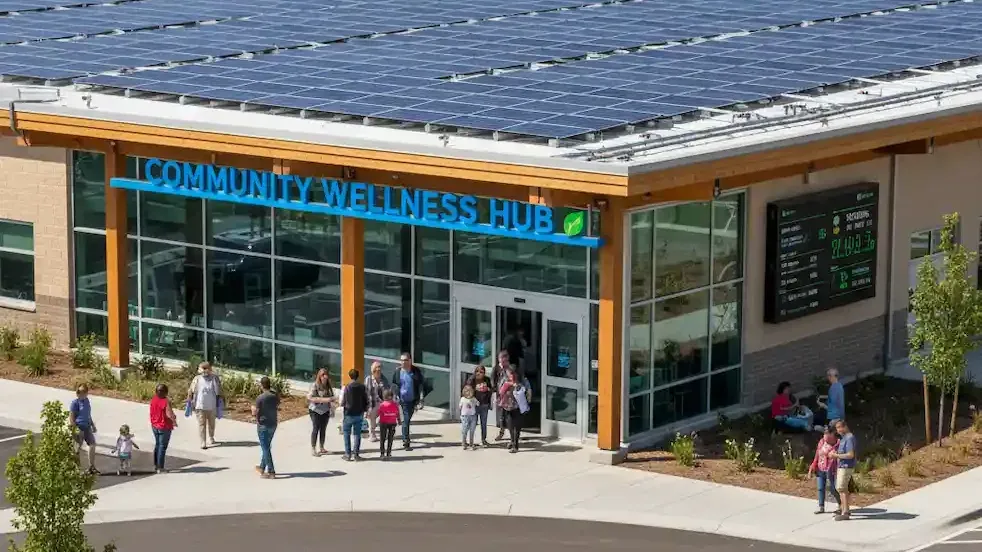
Project Overview
The Oak Park Community Center serves over 5,000 residents annually with after-school programs, senior services, and community events. Rising energy costs were cutting into program budgets, threatening services to the community. This solar retrofit transformed the 40-year-old facility into a model of sustainability while providing educational opportunities for local youth.
Community Impact
The community center provides essential services including:
- After-school tutoring and homework help
- Senior lunch programs and activities
- Job training and computer literacy classes
- Community meetings and cultural events
- Youth sports and recreation programs
Installation Details
We designed a cost-effective 25 kW system optimized for the building’s energy profile:
- 74 high-efficiency solar panels producing 38,000 kWh annually
- String inverters for simple, reliable operation
- Educational display in the lobby showing real-time production
- LED lighting upgrade to maximize solar benefits
- Smart thermostat integration for energy optimization
Technical Specifications
System Components
- Panels: 74x JinkoSolar Tiger Neo (340W, N-type)
- Inverters: 2x SMA Sunny Boy 12.5 kW inverters
- Monitoring: SMA Sunny Portal with public display
- Mounting: SnapNrack Series 100 attachments
- Structural: Roof reinforcement at 12 attachment points
- Educational Display: 55” interactive touchscreen in lobby
Building Improvements
The project included necessary upgrades:
- Structural roof reinforcement (engineer certified)
- Electrical panel upgrade to 200A service
- LED lighting retrofit throughout facility
- Insulation improvements in attic space
- Smart thermostat installation
Funding & Financial Structure
Project Costs
- Total System Cost: $75,000
- Structural Upgrades: $12,000
- LED Lighting: $8,000
- Educational Display: $5,000
- Total Project Cost: $100,000
Funding Sources
- Federal Community Grant: $40,000 (40%)
- California SOMAH Program: $25,000 (25%)
- Local Business Sponsors: $15,000 (15%)
- Community Fundraiser: $10,000 (10%)
- Center Budget: $10,000 (10%)
Energy Savings
- Previous Annual Cost: $22,000
- New Annual Cost: $9,500
- Annual Savings: $12,500
- ROI for Center: Net cost of $10,000 paid back in <1 year
- 25-Year Savings: $312,500+
Educational Component
A key feature of this project is its educational value:
Interactive Lobby Display
The 55” touchscreen shows:
- Real-time energy production
- Environmental impact metrics
- Historical performance data
- Educational content about solar energy
- Student art celebrating renewable energy
School Programs
The installation serves as a living classroom:
- Elementary field trips to learn about solar energy
- High school STEM projects using real system data
- College internships in renewable energy
- Community workshops on home solar options
- Professional development for local educators
Youth Engagement
- 15 local high school students assisted with installation
- After-school “Green Energy Club” formed
- Annual “Solar Day” celebration with activities
- Student-created content for social media
Environmental Impact
Carbon Footprint Reduction
- CO2 Saved: 18 tons annually
- Equivalent Trees: 420 trees planted
- Car Miles Avoided: 45,000 miles per year
- Coal Avoided: 19,000 lbs not burned
Community Ripple Effect
Since installation, the project has inspired:
- 23 residential solar installations in the neighborhood
- 3 local small businesses to go solar
- City council solar policy discussions
- Regional community center network interest
Installation & Community Involvement
Timeline
The project took 6 weeks with significant community participation:
Weeks 1-2: Structural work and electrical upgrades
Week 3: Mounting system installation (volunteers helped)
Week 4: Solar panel installation
Week 5: Inverter and monitoring setup
Week 6: Educational display installation and commissioning
Volunteer Participation
- 50+ community volunteers assisted with non-technical tasks
- Local high school robotics team helped with display programming
- College engineering students documented the project
- Professional photographers donated documentation
Program Impact
With $12,500 in annual energy savings, the center has:
- Extended after-school program hours
- Hired an additional part-time tutor
- Launched a summer STEM camp
- Expanded senior lunch program
- Upgraded computer lab equipment
Recognition & Media Coverage
Awards
- California Community Foundation - Sustainability Award
- Sacramento Green Business Award - Non-Profit Category
- AIA Sacramento - Community Impact Honorable Mention
Media Features
- Sacramento Bee front-page feature
- Local TV news segments (3 stations)
- National Public Radio story
- Renewable Energy World magazine
- Featured in solar industry webinars
Future Plans
The success of this project has inspired phase 2 planning:
- Additional 15 kW expansion on adjacent building
- Electric vehicle charging stations
- Battery storage for emergency backup power
- Community solar garden for residents without suitable roofs
- Regional model for other community centers
Client Testimonial
“This solar installation has been transformative for our center. Not only are we saving over $1,000 every month on electricity, but the educational impact has been incredible. Kids who never thought about renewable energy are now excited about STEM careers. Local families see our success and are installing solar on their own homes. This project has sparked a green energy movement in our neighborhood, and we couldn’t be prouder.”
— Jennifer Williams, Executive Director, Oak Park Community Center
Community Quotes
“My grandson comes home from the center talking about solar panels and saving the planet. It’s wonderful to see kids so engaged.”
— Rosa Martinez, Community Member
“Helping install these panels was the coolest thing I’ve done in high school. Now I’m planning to study renewable energy in college.”
— Marcus Johnson, High School Volunteer
Lessons Learned & Best Practices
This project demonstrated several key success factors:
- Community engagement from day one builds support and ownership
- Multiple funding sources make projects accessible to non-profits
- Educational components multiply the project’s impact
- Volunteer involvement reduces costs and builds excitement
- Transparent communication keeps stakeholders informed and excited
Is your community organization interested in going solar? We offer special pricing and grant assistance for non-profits. Contact us to learn more.
Ready to start your solar journey?
Get a free consultation and custom quote for your home or business.